

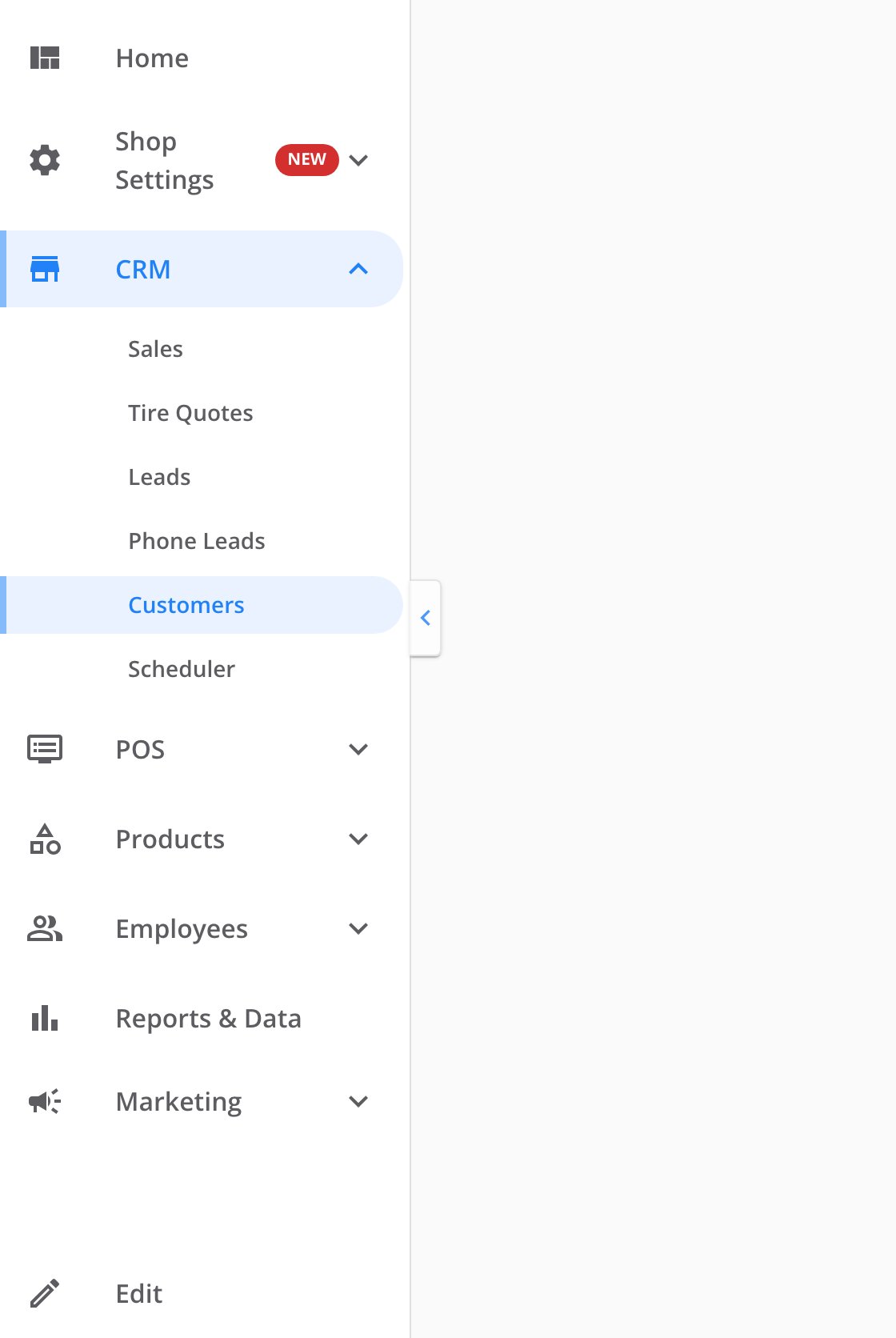
Open CRM in the side menu to find Customers.
Everyone at your dealer sees Customers, whatever their role.
Find a customer
When: A customer calls about their account, or brings in a payment.1
Open Customers
Select CRM in the side menu, then Customers.
2
Search for the customer
Type a name, business name, phone number, or email address in Search customers.
3
Open the customer
Select the customer’s row. Their customer record opens.
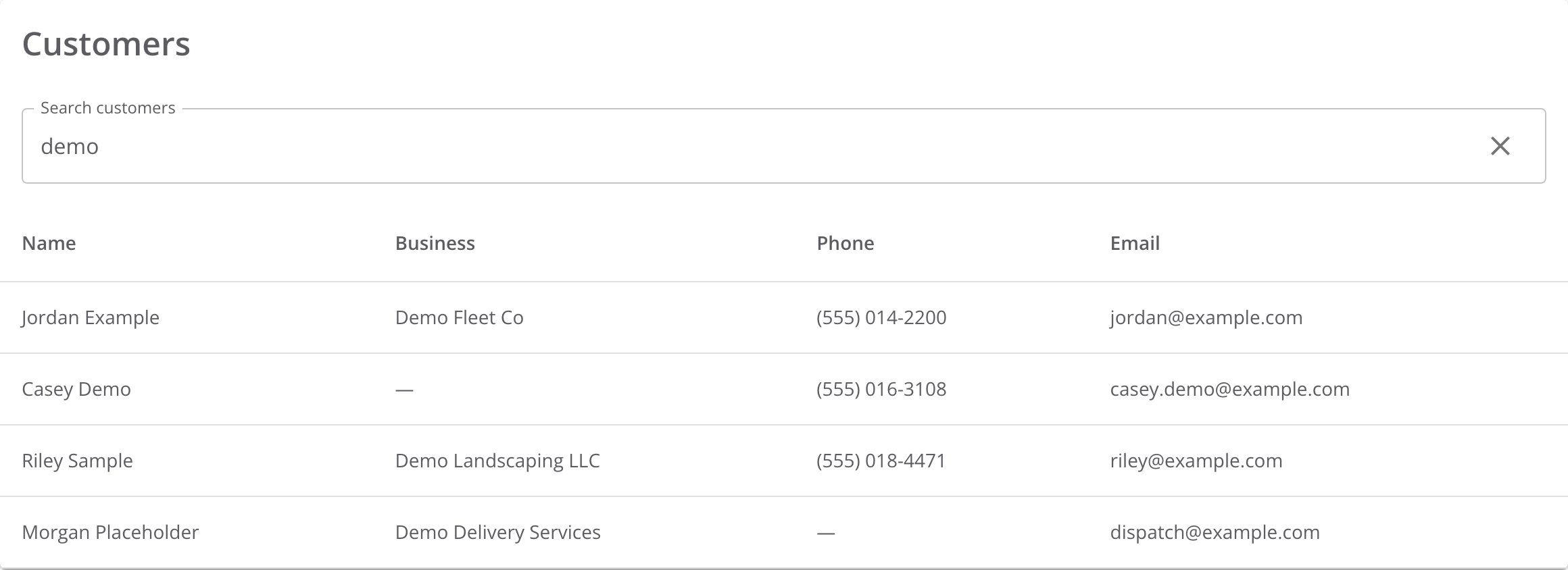
Type in Search customers to find a customer by name, business, phone or email.
Check what a customer owes
When: You need the customer’s balance before you take a payment. The customer record shows three figures on the right:- Amount due is the total the customer still owes on finished work.
- Completed, unpaid work orders is how many work orders make up that total.
- Store credit is the credit the customer holds with you.
Open an unpaid work order
When: The customer asks which jobs make up their balance. The Completed, unpaid work orders table lists the jobs behind Amount due. It shows the 100 most recently created, sorted oldest first by the date someone created each one. Each row shows the vehicle, the status, the date created, and the Total Price.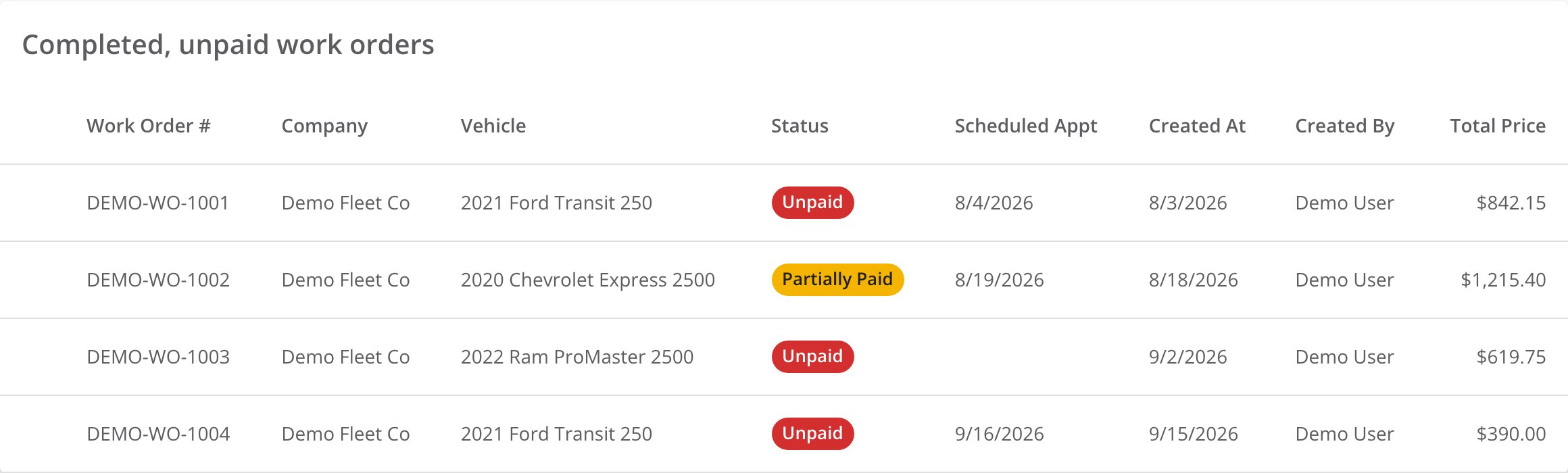
Each row is a finished work order the customer has not paid in full.
1
Find the work order
Look in Completed, unpaid work orders on the customer record.
2
Open the work order
Select the row. The work order opens in Point of Sale.
Take a payment on the account
When: The customer pays for several finished work orders at once. Select Pay Up on the customer record to record one payment against everything the customer owes. Taking charge account payments shows each step.How you know it worked
The customer record opens with the customer’s business name, or their name, at the top. Amount due shows a dollar figure, and the table lists the work orders behind it.If it doesn’t work
Customers is missing from the side menu. If CRM is missing too, open Hidden Menus at the bottom of the side menu. Otherwise, reload the page. If Customers is still missing, contact support. The customer isn’t in the list. The list shows a limited number of matches. Type more of the name, or search by phone number instead. Amount due shows a dash, and Pay Up is grayed out. TireTutor can’t read the balance right now. Reload the page. If the dash stays, contact support. Amount due looks too low. Check the work orders you expected. A work order counts only when it is finished and unpaid. If your access covers some stores only, work orders at other stores don’t count. The page says Customer not found. Search for the customer again from Customers.Still need help?
Contact support through the contact form, or call 855-400-4521.Mention the customer’s name and the work order numbers you expected to see.Where to go next
Taking charge account payments
Record one payment that pays off the oldest finished work orders first.
Taking payments
Collect a payment on a single work order at the counter.